About My Company

About Me
My name is Tania, (pronounced TAWN-yuh) and I'm a Certified Clinical Herbalist, Certified Aromatherapist, Herbal Teacher, Writer, and Reiki Master.
I grew up in the Ozarks of Central Missouri, to a family of farmers and a long line of herbal healers. My great-grandmother, grandmother, and mother have all been involved with herbal healing in the Ozark Mountain folk tradition, and have a knowledge of herbalism and plant medicine.
Our our roots run deep in the Ozarks. Many of my herbal remedies are wildcrafted from this region, and from the prairie biome around Kansas City, Missouri.
I discovered aromatherapy and started using traditional western herbal medicine while trying to manage my own health concerns, because I felt like it was a more holistic approach. I eventually decided to combine my love of bath products with my love of herbalism and aromatherapy, and Ivory Isis Herbals was founded! I make all of my products with organic and home-grown pesticide-free ingredients.
I live outside Kansas City, Missouri, the ancestral land of the Kiikaapoi (Kickapoo) Wazhazhe Maⁿzhaⁿ (Osage) Kaw (Kansa) and Očeti Šakówiŋ (Sioux). I think about the land that I live on and the land of the native people who once lived here, and I have a deep respect for Native Americans. I often wish that our desire to spread over the lands we now live on was in harmony with these people, and so I do as much as I can for Native American activism and support.
Why We’re Different
Everything I make goes through my own personal product tests and standards.
I take a lot of care and consideration in creating quality products and use careful sanitation standards when I'm creating!
The scents I purchase and make are made up of only true essential oils- meaning that there are absolutely no hazardous materials used.
My products contain NONE of the following:
✖ Carcinogens: These are materials known or thought to cause cancer.
✖ Mutagens: Materials that change the DNA of a cell, harming the cell and causing diseases like cancer.
✖ Reproductive toxins: Toxins that adversely affect reproductive organs and increase the risk of birth defects.
✖ Organ toxins: These are toxins that can cause adverse effects or disease within specific bodily organs.
✖ Acute toxins: Toxins that can cause adverse effects from a single exposure. Generally, this would be accidental exposure like spillage or ingestion.
History and Traditions
I grew up in the Ozarks to a family of farmers and herbalists who were all women in the Ozark folk tradition of herbalism.
I took a lot of our traditions for granted until I formally started studying herbalism in 2018.
I am currently a certified Clinical Herbalist through The Bitter Herb Academy, my Sacred Earth Arts mentorship, with additional advanced courses that I've taken through The Herbal Academy and The School of Evolutionary Herbalism.
I am also a certified Aromatherapist through Heart of Herbs Herbal School.
I continue to expand my products every day as I learn more about herbalism.
I use my herbs with respect to those who have been marginalized and taken from historically, and respect how the traditions have evolved over time and practice.
Focus and Intent
My focus and intent are also important in the creation of my products. I focus on creating positive changes and aspects in your life as my products touch you and as you use them in your own life.
I also use medical astrology in my work with herbs, picking herbs during the right sign and time to ensure the highest quality.
Even if you don’t believe in medical astrolgy - it doesn’t hurt, and if you research it further, it’s actually very interesting.
Sustainable Harvest
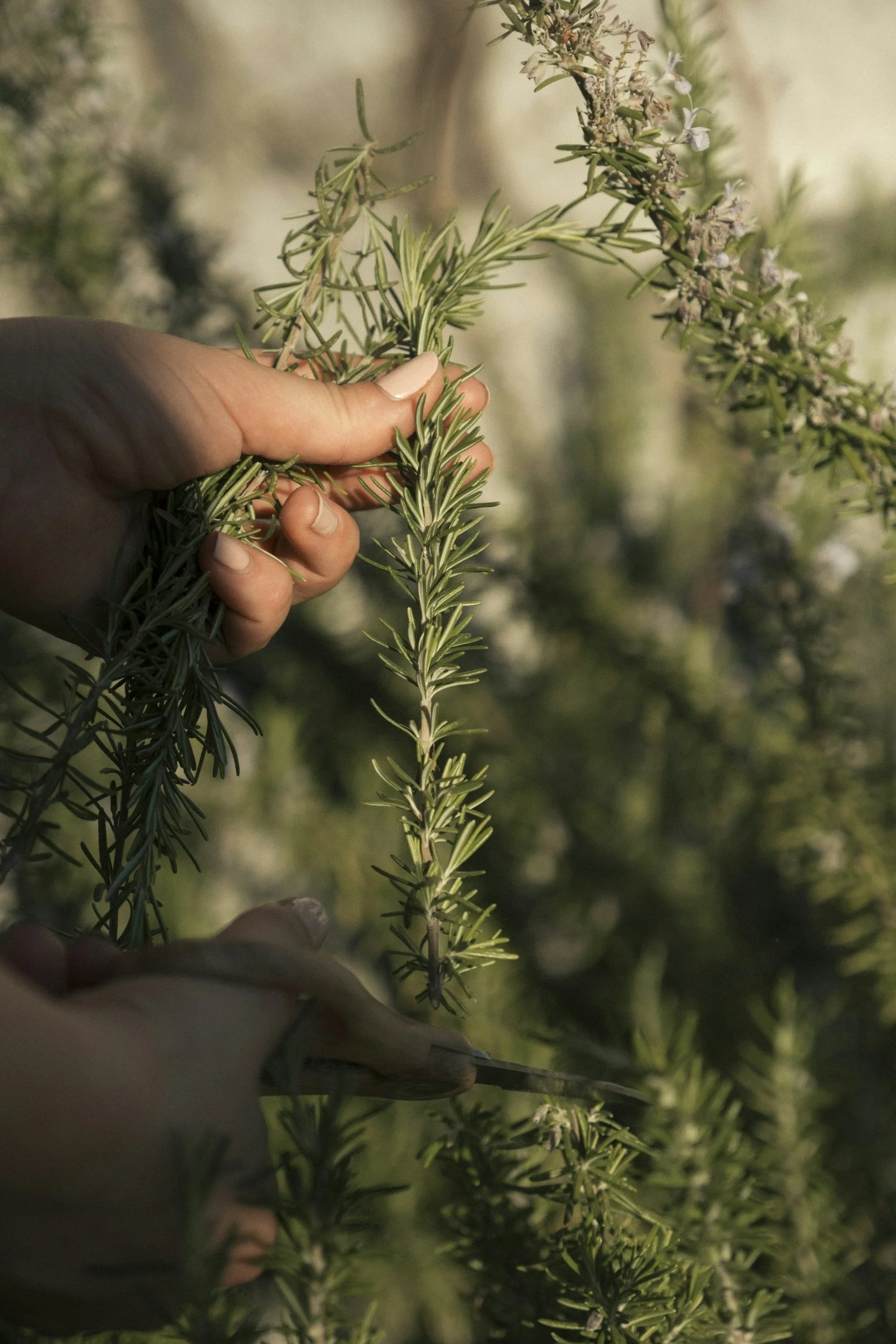
I sustainably harvest the herbs that I use from my own property in Kansas City and my family property in the Ozarks. I never use harmful pesticides and refer to these herbs as "home-grown" or "wildcrafted" in my product ingredients lists. I use biodynamic farming methods in growing my plants.
Biodynamic farming practices and farming methods include avoiding chemical soil fertilizers to enhance soil fertility, consideration of biological organisms (from living organisms in the soil to animal health), diverse crop rotation, cover crops, and compost, as well as meeting guidelines for perennial and annual planting.
I make sure that I use plants that grow in abundance and never over-harvest, leaving behind at least half a stand of plants to grow for the future when I am wildcrafting.
Everything else I use for my business is small-business sourced, sustainable, recyclable, pesticide-free and/or organic, and very high quality.